



How to serve on a third sector board | Susan Boster in conversation with Arlo Brady
Arlo is CEO of Freuds, a group of businesses ranging from Freud Communications, the world’s largest PR agency certified as a B Corp, and Goals House; through to Academy Award winning film and TV production studios, a street art studio, a financial communications agency, and an investment business with offices in the UK and USA.
Over the last 25 years, Arlo has advised some of the world’s most influential institutions and leaders at key moments of opportunity, change and crisis. Arlo is a communications expert with a lifelong passion and expertise in reputation and sustainability. He also specialises in narrative development, issues management, behaviour change and the dynamics of family businesses.
Arlo currently serves as Chairman of Blue Marine Foundation, one of Europe’s leading environmental NGOs, where he has been a Trustee since its foundation; he is a Royal College of Art Council Member, a Trustee of the Sustainable Food Trust and Co-Chair of the S30 - a group of the world’s leading Chief Sustainability Officers convened by HRH The Prince of Wales, now HM King Charles II.
Arlo started his career in academia, where he focussed on the reputational risks and opportunities associated with sustainability – the subject of his first book. Arlo has three degrees, including a M.Sc. from Imperial College and a Ph.D. from the Judge Business School, Cambridge University. Arlo is a dual British and Italian citizen and lives in Oxford, England.
What boards, private and third sector, do you currently sit on, and which have you sat on in the past?
I chair the Blue Marine Foundation and have been a trustee since its inception 15 years ago. I'm on the board of the Sustainable Food Trust, which is an organisation focused on regenerative agriculture. I have recently joined the Royal College of Art as a council member; I started my career in education, so I still have an interest in that space. I’m also on the board of a handful of for-profit companies that are part of Freuds Group.
What prompted you to begin serving on non-profit boards?
I was brought up by parents who were activists, so I always had a sense that individuals can make a difference, if they are passionate about a cause. My parents were always passionate about lots of different things. Through my parents (who are passionate about many things), I felt that I had a responsibility to serve and to help beyond my day job.
I have a very diverse set of interests. A lot of people start their career in consultancy because they think it's a good place to try out lots of different things, and then after a few years of doing it, they get very tired of juggling. It can be quite exhausting, but I actually like juggling; I really enjoy the diversity of getting involved in all sorts of different sectors and different spaces. I have always been interested in environmental issues and [probably influenced by growing up near the Norfolk coast] I've always been passionate about marine conservation and oceans.
Thankfully, through Freuds, I've been able to find aligned opportunities between things that I really care about, things that are commercially viable, and topic areas where the skill sets that I have add value. I look at how the NGO operates, for example, and try to think about where my tangible skills sets can make a difference.
I have a PhD, but I realise as I look back that academia was never for me. Successful people in the academic world have a very good ability to dive down into a singular area of focus and become the world's number one expert in that area. In my case, I'm really passionate about ocean conservation as well as regenerative agriculture. I'm interested in marketing and TV production; I love making films. It turns out that you can have a career that allows you to touch upon lots of different areas. You don't have to just focus on one.
At the end of the day, most of my time is spent running companies, but that does allow me to have lots of other interests which are, strangely, related. I always thought I could be more effective driving change on the inside of organisations, and that’s how I ended up wanting to advise companies.
Most people want to make a positive difference to the world if they can. I've discovered that it's relatively easy to have an impact if you are in a position of influence. In fact, I think that you have responsibility to make a positive impact if you have some form of influence.
You have worked across a huge variety of sectors, from communications to rum. What have been the benefits of cross-sector board membership for personal and professional growth? Can you share some examples?
In the NGO world, you've got to be super careful about crossover. You've got to take your responsibility very seriously for the organisation that you're representing, and have paper walls up in order to distinguish between each of the different roles that you play.
I would say the personal benefits are the most significant ones. Obviously, there are crossover things that have occurred throughout the time I've been on all these boards, but it's personal growth that has helped me the most. When you're on a board, you are the ultimate last line of responsibility. Very often within the corporate world (unless you own the company that you work for), you don't feel the pressure of responsibility. I think that being on a board of an NGO puts you on the front line on a regular basis, and makes you understand what it means to have a responsibility to both the cause that you’re focused on and the staff that work for the organisation. It’s an opportunity, especially if you’re relatively young (as I was when I joined the Blue Marine Foundation as a Trustee), to take on that responsibility very early in your career.
I've always been a strong believer in serendipity, and sometimes, if you're working in a totally different area, it's quite helpful to come at a topic like marine conservation or regenerative agriculture without actually knowing a great deal about it. You will have a completely different perspective on it, and maybe you can come up with a different way of solving the problem that other people would never have come up with.
Years ago, Freuds had a Goals House event with Google.org, where they introduced some of Google’s engineers to the Goals House community, who understand some incredibly complicated issues but don't have a sense of how technology could help address them. In turn, the Google engineers saw an immediate opportunity to help, through their know how, people in say, the Maldives, who are affected by sea level rises on their islands.
I think it's easy when you're on a board to get caught up with the legal and governance responsibilities and not think about the added value that you can provide by helping the organisation to look at something slightly differently.
Reflecting on your time serving on non-profit boards, what key insights or lessons have you gained that you have successfully applied to your roles on for-profit boards?
All of the corporate boards I sit on are private, so one immediate thing that I see is the terrific advantages that come from having independent perspectives at the board table. I think that’s quite an interesting area.
NGOs are extraordinarily mission-focused or purpose-orientated, whilst most companies are not. That means that a lot of the discussions that you have on an NGO board are focused around holding the NGO to account on whether it's delivering against the mission. In a corporate environment, you are mostly talking about finances, which are an indicator of success, but not necessarily the purpose of a firm. These days we are seeing a lot of purpose-bashing, but I do think that there's a lot that companies can learn from NGOs about how to focus and have clarity on their mission.
Are there specific practices from for-profit governance that you feel should be more widely adopted across non-profit boards, or vice versa?
Entrepreneurial dynamism. It's easy to get stuck in bureaucracy in the NGO world. The investor landscape has professionalised a lot since I first joined an NGO board, and their requirements are much more bureaucratic now than they ever have been. So, a lot of organisations are led by the fact that their funders are requiring them to act and behave in a certain way, but we live in a world where you've got to move quite quickly to make a real difference.
Over the last few years, there's been this massive concentration of wealth in the hands of a relatively small number of people. That makes fundraising straightforward, because it's clear where the money is; yet, a lot of money is now in the hands of ‘immature funders’ (people that haven't given away a lot of money, historically).
Many are in tech, and they are keen to try a different type of philanthropy. And boards will now need to adopt a more entrepreneurial tone in order to be able to attract their support. These people won't be excited by [NGOs] filling in bureaucratic forms; they'll be excited by moon shots and big, scalable ideas. Yet, it is very difficult to have proper conversations about moon shots in the NGO world. You've got to keep it real, but you've also got to make time on those boards to talk about what could be possible if you were in a in a very different financial position. What could you do if things were dramatically different?
As a Chair (and a Founder yourself), what do you feel are the benefits of having board members with experience in both the non-profit and for-profit sectors?
A lot of people live their life in a silo. Particularly people who work for big companies, sometimes they feel like that's their entire life. It's a big, wide world out there, and I think over the last couple of years we've realised that those ivory tower companies are very vulnerable to what goes on outside the window.
Big companies have kept their windows firmly shut, not realising that the outside world can have an effect on them and not realising that they can have an effect on the outside world. I think that people who serve on non-profit boards usually have a good sense as to what's going on out there, and can bring some of that outside thinking in to the corporate world to challenge people and question conventional wisdom.
For example, many businesses benefit in some way from the sea, which intersects with my work at the Blue Marine Foundation. These aren’t surprising crossovers, but they are often overlooked simply because people don’t naturally think through that lens. Serving in the not for profit space also provides valuable exposure to the legal and regulatory side of things. The EU is a great example, as it regulates many of the matters that NGOs deal with. By having an understanding of that landscape, you can better anticipate where some of the new regulation might be coming from emerge.
What role does corporate social impact play in your work with Freuds and other for-profit boards? How does your experience on non-profit boards influence that, if at all?
Freuds is a B Corp, and becoming a B Corp, requires you to change your Articles of Association to make you legally responsible for taking account of the impact you have on all of your stakeholders, not just your shareholders. In UK Corporate Law, fiduciary duty typically means prioritizing the interests of the company’s owners. At Freuds, we have long known that we have a broader range of interests to manage: that’s been very helpful in driving our thinking at board level.
Do I take that thinking into other boards? Absolutely. But a board is not always and necessarily the right environment to be pushing personal agendas. I think you've got to try to keep some of that back unless you see an opportunity to make a meaningful difference. When that moment comes, it’s important to take it. I'm always looking for opportunities for triangulation.
When have you gotten it wrong, and what did you learn?
Most of the time, the things that go wrong are caused by some breakdown in relations between the board and the executive. This usually stems from a misunderstanding or from a relationship that wasn’t properly developed. Some people believe that board members should remain aloof and separate from the organisation, but I think that it is essential to develop strong relationships with the people that are working within the organisation that you're governing. You need to really understand what motivates them, what drives them, what their interests are, and what they're trying to achieve. When you do that, you can avoid reduce the likelihood of misunderstandings.
There's a concept that I like called, ‘Disagree and commit’. As a board member, you won't always agree with what the majority of people decide to do, and if these disagreements become visible or persistent, they can cause quite a lot of unsettlement in an organisation. It is important that everyone understands that the board’s role is to reach shared consensus. If the common consensus is ‘Option A’, then we have to agree to commit to that and push forward.
Finally, what advice would you give to someone who is joining their first board, regardless of the sector?
First: Remember that the people that are running the organisation that you're governing are the experts, not you. You're not there because you somehow know more about the topic. They are the ones that really understand the space in which the organisation operatest, and you’ve got to respect their expertise.
Second: Take a course to understand the actual responsibilities of a board member. It's a great honour to represent an NGO, or to perform a governance role, but you do have to know exactly what it is. Most of the time that won't matter, but if something goes wrong and you do not fully understand your duties, it can quickly become overwhelming. Once something goes wrong, it's too late to start learning. Many NGOs will offer the chance to go on a half-day course. It’s easy to look at that and think, “That's a half a day out the office that I could do without”, but it’s genuinely important.
Finally, think about your fellow board members’ contributions over a longer period, not year by year. There's a lot of focus on evaluating board performance (quite rightly), but contributions do not come in neat annual increments. Some people can make a big contribution in one year or one month, and that's enough for a lifetime. I sometimes think that in the NGO world, there's a real focus on everyone turning up to every meeting and participating in everything. Actually, as long as you've got the right quorum to be playing the governance role, the organisation can still be highly effective.
Serving on NGO boards has been an amazing experience for me. I've loved every minute of it, and it is a great privilege to be able to make a tangible difference in people's lives. One message that I want to share is that I think people can make that contribution a lot earlier in their career than they may think. This is particularly true now, when we're living in a world where technology is transforming our lives at pace and NGOs risk being behind the curve. Most companies are focused on AI and quantum computing, but you wouldn't find that as a major focus for most NGOs. Bringing younger people onto boards, people who are digital natives, is crucial.
Susan Boster (interviewer) is the Founder and CEO of Boster Group Ltd., an award-winning consultancy specialising in the development of innovative partnerships between global corporations, cultural institutions and social impact foundations. Current and recent clients include Disney, Meta, Gap Inc., Moët Hennessy, J.P. Morgan, Bacardi, EY, Goldman Sachs, Montblanc and the Leverhulme Trust.
Previously, as Marketing Director at Barnes & Noble and later CMO at News International, Susan oversaw the transitions of both companies to e-commerce and digital platforms, including the launch of barnesandnoble.com.
Susan sits on the board of the Design Museum and is an Advisor to The Representation Project. She previously served as a Trustee at the Donmar Warehouse and as Vice Chair of the English National Ballet. Susan is regularly featured as a moderator and keynote speaker at conferences such as the World Economic Forum, the Cannes Festival of Creativity and CogX, where she is an Editorial Advisor. She is a Consultant Lecturer at Sotheby’s Institute of Art.
You might also like
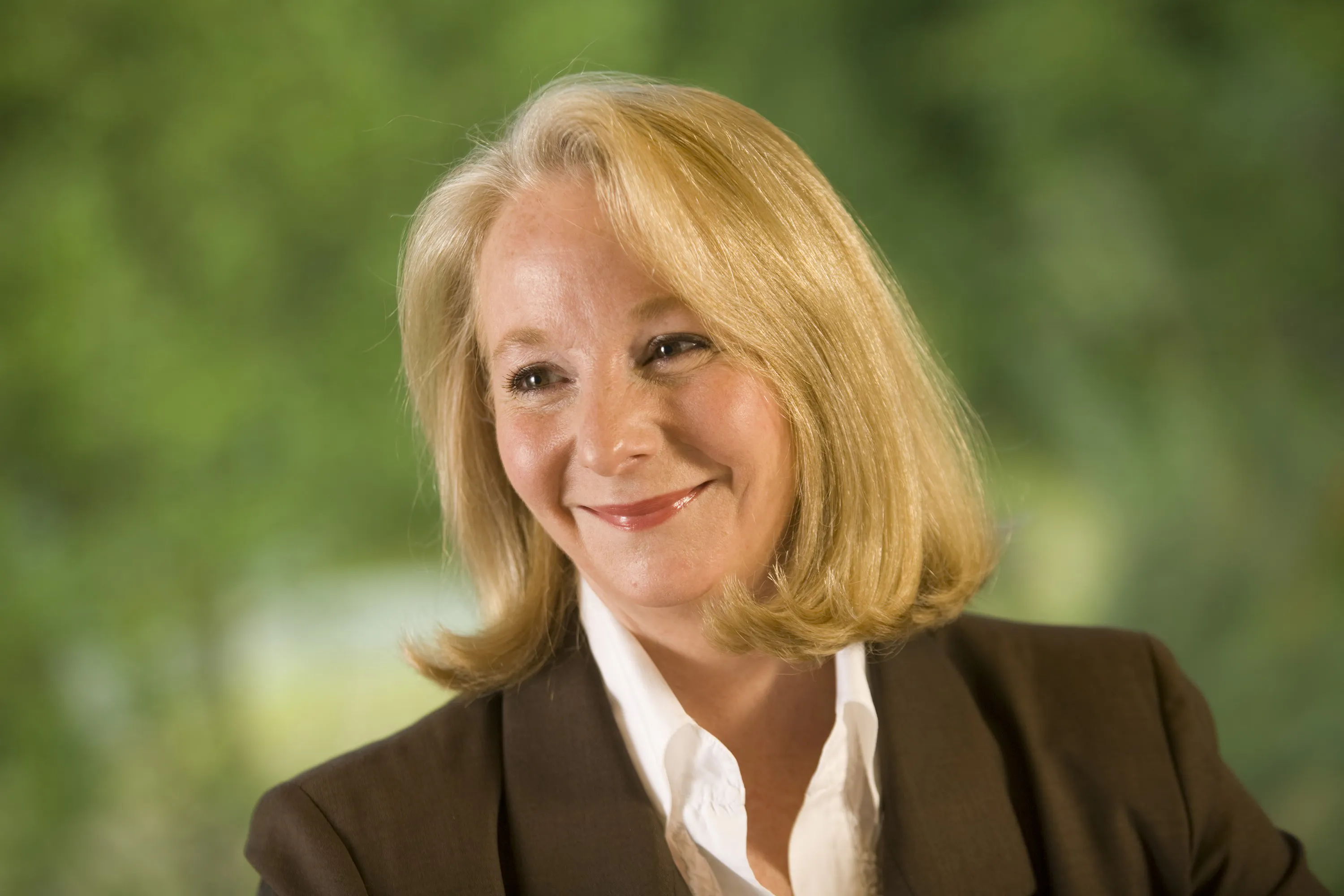
How to serve on a third sector board | Susan Boster in conversation with Marty Wikstrom

How to serve on a third sector board | Susan Boster in conversation with Ed Williams

How do I step up to chair positions?